Family Protection
Why legacy planning is about more than writing a will
Alan Mountford-Brown · 6 September 2026 · 2 min read
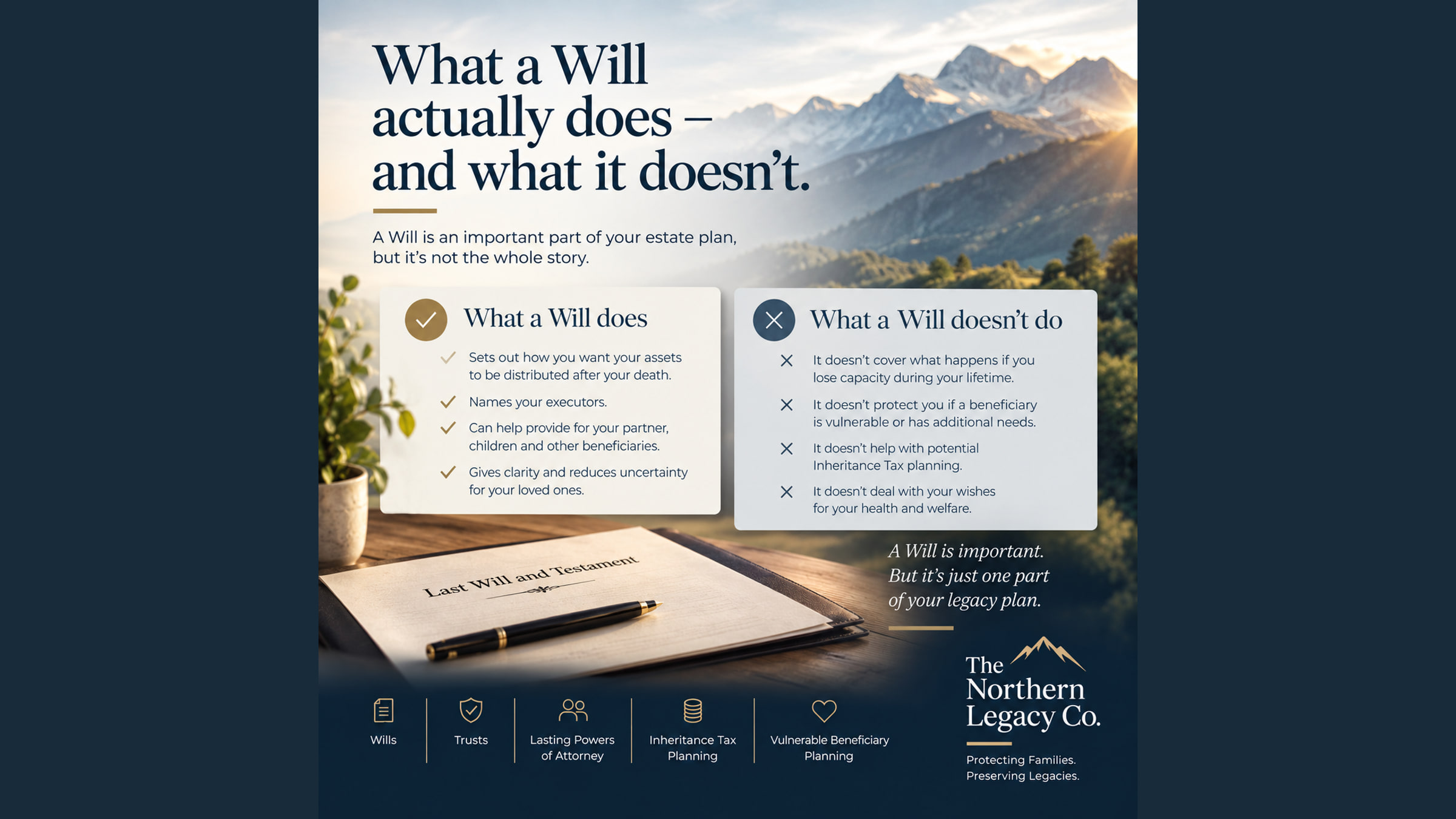
A will is an important part of planning for the future — but for most families it is only one piece of a much bigger picture. Capacity, guardianship, a vulnerable beneficiary and inheritance tax all sit alongside it.
When people hear the words “estate planning”, they often think about one thing: writing a will.
And a will is certainly an important part of making plans for the future. But for many families, it is only one piece of a much bigger picture.
Your family circumstances can change. Your assets can change. The needs of the people you love can change. And your planning may need to change with them.
What happens if you lose capacity?
A will deals with what happens after your death. But what happens if you are still alive but become unable to make decisions for yourself?
Who would deal with your finances? Who could access the information they need? Who could make decisions about your welfare?
Lasting powers of attorney can form an important part of planning for these circumstances.
What happens to your children?
Parents often focus on making sure their children are provided for. But good planning can involve more than simply deciding who receives an inheritance.
Families may need to consider guardianship, how assets are managed, and what happens if circumstances change.
What if a beneficiary is vulnerable?
This is an area where careful planning can become particularly important.
A beneficiary may have additional needs, receive means-tested benefits, or require ongoing support with financial decisions. Leaving an inheritance outright may not always achieve what the family intended.
There may be circumstances where a trust or another planning structure needs to be considered. The right approach depends on the individual circumstances, which is why understanding the family is so important.
What about inheritance tax?
Your estate may be worth considerably more than you realise. Your home, savings, investments, business interests and other assets can all form part of the wider picture.
For some families, inheritance tax planning may therefore need to be considered alongside their will and wider estate planning.
Your circumstances don’t stand still
Perhaps you have:
- Married or divorced
- Had children or grandchildren
- Bought or sold property
- Started or sold a business
- Experienced changes within your family
- Seen a change in a beneficiary’s circumstances
- Built up additional assets
Any of these changes could be a reason to review your existing arrangements.
So what is legacy planning?
For us, legacy planning is about taking a step back. It’s about understanding:
- Who matters to you?
- What do you want to happen?
- What could go wrong?
- What needs protecting?
- What might your family need in the future?
Only then can you begin to consider what arrangements may be appropriate.
Because ultimately, this isn’t really about paperwork. It’s about people. It’s about protecting families and preserving the things that matter most.
Start the conversation
If you’ve been putting your family’s planning off, you don’t need to have all the answers before you begin.
A conversation is a good place to start.